Welcome to ROMS BC's blog. Here, you can read about issues, stories, updates and events for BC's residential rental industry.

Wednesday, December 5, 2012

Provincial Rental Housing Conference - Photos


ROMS BC hosted the first ever Provincial Rental Housing Conference on November 22nd and 23rd, and it was a great success. Over two days, delegates participated in workshops geared to the rental housing industry, attended an industry exhibition and ROMS BC 42nd AGM all at the beautiful Westin Bear Mountain Golf Resort and Spa. 

 
Lisa Pynn from BC Assesment conducting her workshop: Your Rental Property Assesment - Digging Deeper.


Daryn Martiniuk from the Residential Tenancy Branch giving a presentation: What's New at the RTB.


 Mike Bush feeding a live colony of bedbugs provided by Victoria Pest Control after their workshop: Bedbugs - Stigma, Anatomy and Control.


 Carly Ludwar-Jellis - Member Service Manager at ROMS BC addressing the delegates at ROMS BC's 42nd AGM.


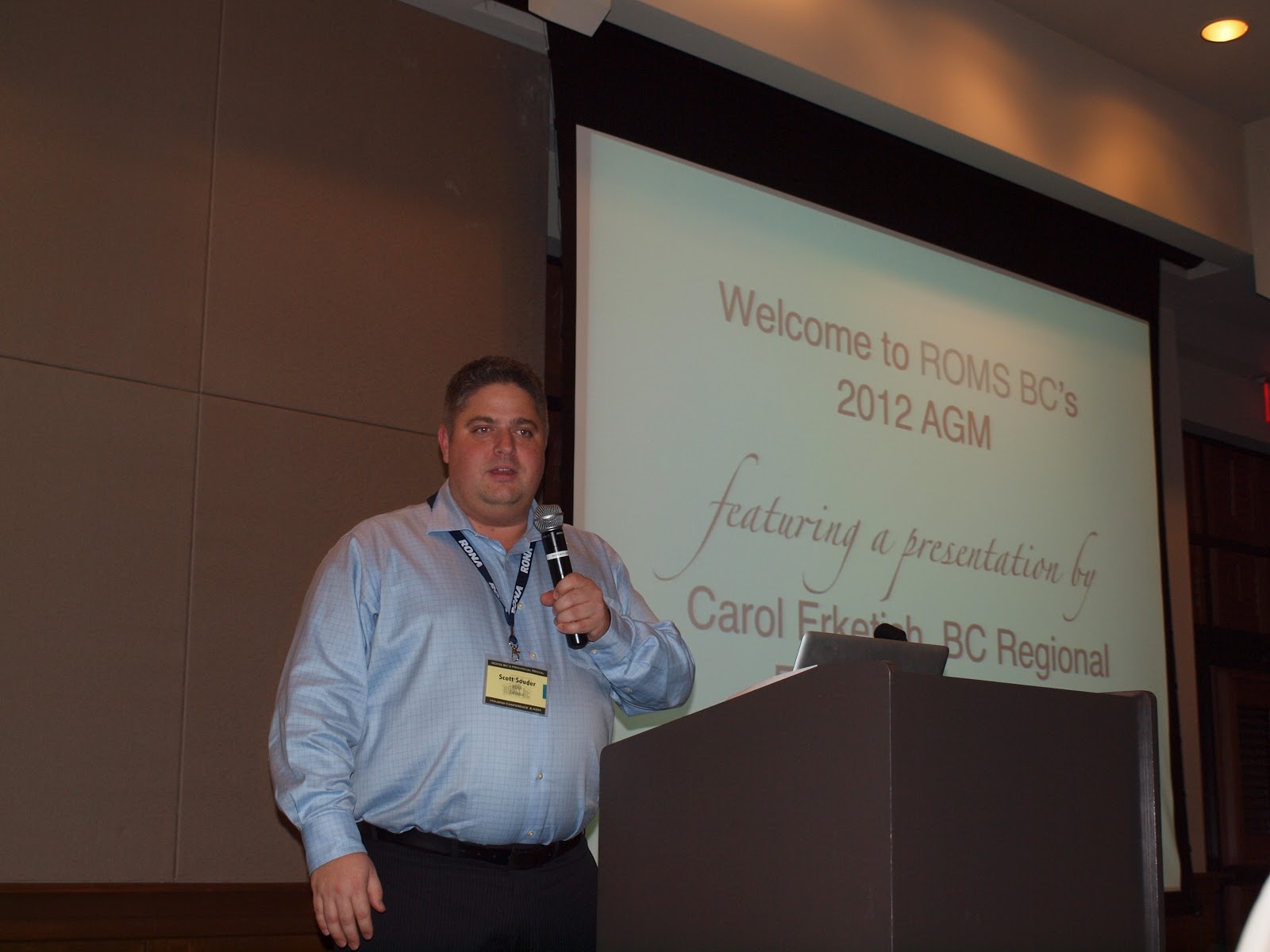
Scott Souder from the conference's platinum sponsor, RONA, speaking at the ROMS BC's 42nd AGM.


Wednesday, November 28, 2012

Why Some Shortcuts Are Not Worth It!

Landlords, like everyone else, are on the look out for the most efficient way to deal with their affairs. And in a perfect world, all of our shortcuts would lead directly to our destination. However we don’t live in a perfect work, so sometimes it is necessary to do extra work to avoid what could turn into a disaster.
 
When renting out a building - usually a house or multiplex - that has more than one unit where utilities are not included, it would seem efficient to have one of the tenants put the utilities in their own name, and have them collect the other share from the other tenants in the building. This would mean you would only have to deal with collecting the rent and no other money each month. This sounds great, but it opens you up for many other issues.

 
One potential disaster is that the utilities do not get paid by the tenant who is responsible for them, though the other tenants have been paying their share to the tenant who should be paying the bill. The end result is the utilities being cut off - and the tenants who paid their bills on time coming after you.

 
Or the opposite; the tenant who is responsible for utilities pays the full bill, but the other tenants decide that they’d rather not pay. Again, the tenant who paid the full utilities - or could only pay part of them seeing as they don’t have enough money - will be looking to you to fix the issue.
The warning to heed? Unless the utilities are billed for one specific unit only, do not require any of your tenants to have the utility bills in their name.

Tuesday, October 23, 2012

Are You a Rental Housing Professional?

ROMS BC is very excited to announce the long- awaited arrival of an accreditation program for landlords in BC. Members currently have access to workshops on more than 25 topics ranging from tenant selection to enforcing orders, but until now there was nothing physical to show for the time you spent improving your knowledge. You will now be able to show that you are more than just an average landlord; you are a Rental Housing Professional. Many members take as many workshops as they can, and accreditation will be a wonderful way to recognize this dedication to landlords improving their professional and managerial skills.

The ROMS BC Rental Housing Professional accreditation program is open to all members and members’ staff, including but not limited to office staff, on-site managers and caretakers. Participation is as easy as attending workshops and collecting credits. Five credits are required for accreditation, which lasts three years and can be extended. Workshops of four hours or less are worth one credit, while workshops over four hours are worth two credits. And as a bonus; once you acquire four credits, your fifth workshop is free (up to a $49 value).

Credits will be offered for any workshop presented by ROMS BC!that has a cost of $29 or more [before any applicable discount]; workshops presented by Associate members are not eligible for credits.

But what about all the workshops members have already taken? ROMS BC is willing to award credits for any workshop attended after January 1st, 2011.

ROMS BC recognizes that many members act as landlords with their spouses or business partners, and that their combined knowledge contributes to their success. Because of this, in addition to individual accreditation, joint accreditation can be achieved. (Joint accreditation is not applicable for property managers or staff.)


--Hunter Boucher

Wednesday, October 10, 2012

The "H" Word; Is Your Tenant A Hoarder? - A Two Part Blog Series

Part Two
The Issue
In our industry, whether or not someone has this mental illness is not the issue; what landlords need to worry about is the potential for harm when someone accumulates a large amount of clutter in his or her rental unit.

If another tenant or neighbour complains and accuses one of your tenants of being a hoarder, how should you respond?  Your first step is to do a routine inspection of the rental unit. Once inside, answer two questions; a) would emergency responders be able to get into and move around in the rental unit, and/or does the clutter represent a fire hazard, and b) is there the potential for (or are there already) sanitary, hygiene and/or insect or rodent infestation issues?

If the door to the unit won't fully open without the assistance of someone on the other side, or there is no way to move from room to room once inside, then the tenant is jeopardizing his or her own safety and potentially the safety of other occupants of the property. As an example, a 79-year-old woman died in a fire at her Washington row house when her hoarding held back firefighters from reaching her in time.

If the rental unit could not be considered to meet reasonable health, cleanliness and sanitary standards, this is a breach of both a material term of the tenancy agreement and the Residential Tenancy Act by the tenant. A rental unit in this condition could also lead to a pest infestation, putting the interests of other occupants at risk as their units could also become infested - especially if the amount of possessions in the infested rental unit is such that a pest control operator could not successfully apply treatments.

In the end, the issue is not whether or not your tenant is a capital-H hoarder or has or doesn’t have a mental illness; what you need to establish is whether or not there is potential for the quiet enjoyment or safety of the tenant and other residents to be affected.

-- Carly Ludwar